
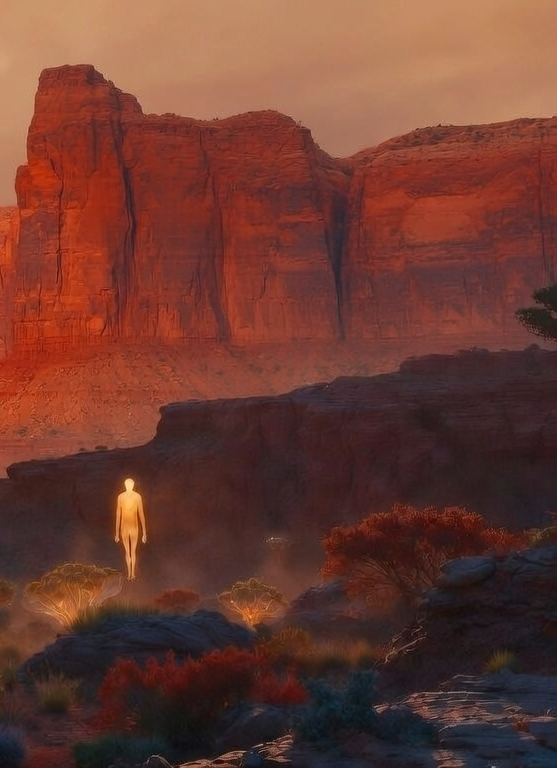
Short answer: Athena Swaruu has not provided a detailed account of her life in ancient Greece. However, scattered references across several transcripts confirm the connection and place it within a broader context: the Taygetans and Engans were physically present in ancient Greece and were the basis for the Greek gods and goddesses, with Athena Swaruu identified specifically as "the Greek Swaruu" in the Swaruunian trinity concept. No detailed narrative of her personal experiences in Greece has been released in the material to date.
The Connection Acknowledged
The clearest statement of the connection comes from Mari Swaruu in transcript S-240, where she explained how the name "Minerva" came to be attached to her. Yazhi Swaruu, in what Mari described as her strange ideas and associations, decided to see the three of them as a triad: Sophia (Yazhi) was the Egyptian Swaruu, Athena was the Greek Swaruu, and Minerva (Mari) was the Roman Swaruu — based on the three goddesses of wisdom. Mari noted that she does not agree with this particular framing and finds it somewhat childish, but she acknowledged that Yazhi has full memory of having been Sophia, the original one, and that Yazhi takes both Athena and Mari as part of herself. Mari added that Yazhi has many very special strong abilities that might be associated with the word "powers" (S-240, Mari Swaruu).
This places Athena Swaruu in Greece within the same framework as Sophia/Yazhi in Egypt — as a Swaruunian who was present in the ancient world and was treated as a goddess because of advanced technology and abilities, not because of any supernatural divine status.
The Taygetans and Engans as Greek Gods
The broader context for Athena's presence in Greece is provided by two important transcripts. In transcript 409, Athena Swaruu herself stated that the gods of Olympus, with their love affairs and entanglements, denote not that the gods are very human but that the humans were watching or finding out about the lives of the stellar beings that visited them at that time. She added the caveat that it is not known how much of that is true and how much is exaggerations or embellishments added by the humans (409, Athena Swaruu).
Mari Swaruu expanded on this extensively in transcript S-214 on the Engan people. She stated that both the Engans and the Taygetans were responsible for implanting many ideas and concepts associated with human-looking gods and goddesses, including those in the Greek, Roman, and Scandinavian pantheons. They were taken as deities because of their high technology and their habit of directly sharing useful concepts like metallurgy, agriculture, and philosophy with the local population. Mari was emphatic that despite being treated as gods, they were only more people — mortal, with the full range of human drama, love affairs, and mundane needs. She cited Hesiod's Theogony, written around 700 BC, as astonishingly accurate in describing the relationships and behaviour of these beings, while also containing distortions and human misinterpretations (S-214, Mari Swaruu).
Mari specifically identified Zeus, Jupiter, Amun, and Odin as the same person moving between cultures — a mortal with power and technology, last seen in Scandinavia missing an eye. Many of the gods and goddesses across the Greek, Roman, and Scandinavian pantheons refer to the same exact individuals (S-214, Mari Swaruu).
The Geographic Connection
It is worth noting that Greece contains a real mountain called Mount Taygetus (Taÿgetos) in the Peloponnese — a 2,407-metre peak that was central to Spartan culture and from which the Taygete figure of Greek mythology takes her name. Taygete was one of the seven Pleiades in Greek mythology, daughters of Atlas. This geographical-mythological connection between the Pleiades, the name Taygeta, and a specific location in Greece is consistent with the material's account of Taygetan presence in the ancient Greek world, though the transcripts do not explicitly discuss this particular mountain.
What Remains Untold
Despite the connection being acknowledged, Athena Swaruu has not given a personal account of what she was doing in ancient Greece, who she interacted with, what her role was, or how she relates to the Athena of Greek mythology specifically. The material confirms the general framework — Taygetans and Engans were the Greek gods — but the specific story of Athena Swaruu's life in Greece remains unreleased. This is one of the questions the community has specifically asked (recorded as a question proposal from June 2023), but it has not yet been addressed in detail.
Sources: Transcript S-240 (Mari Swaruu), Transcript 409 (Athena Swaruu), Transcript S-214 (Mari Swaruu)
Speakers cited: Athena Swaruu, Mari Swaruu