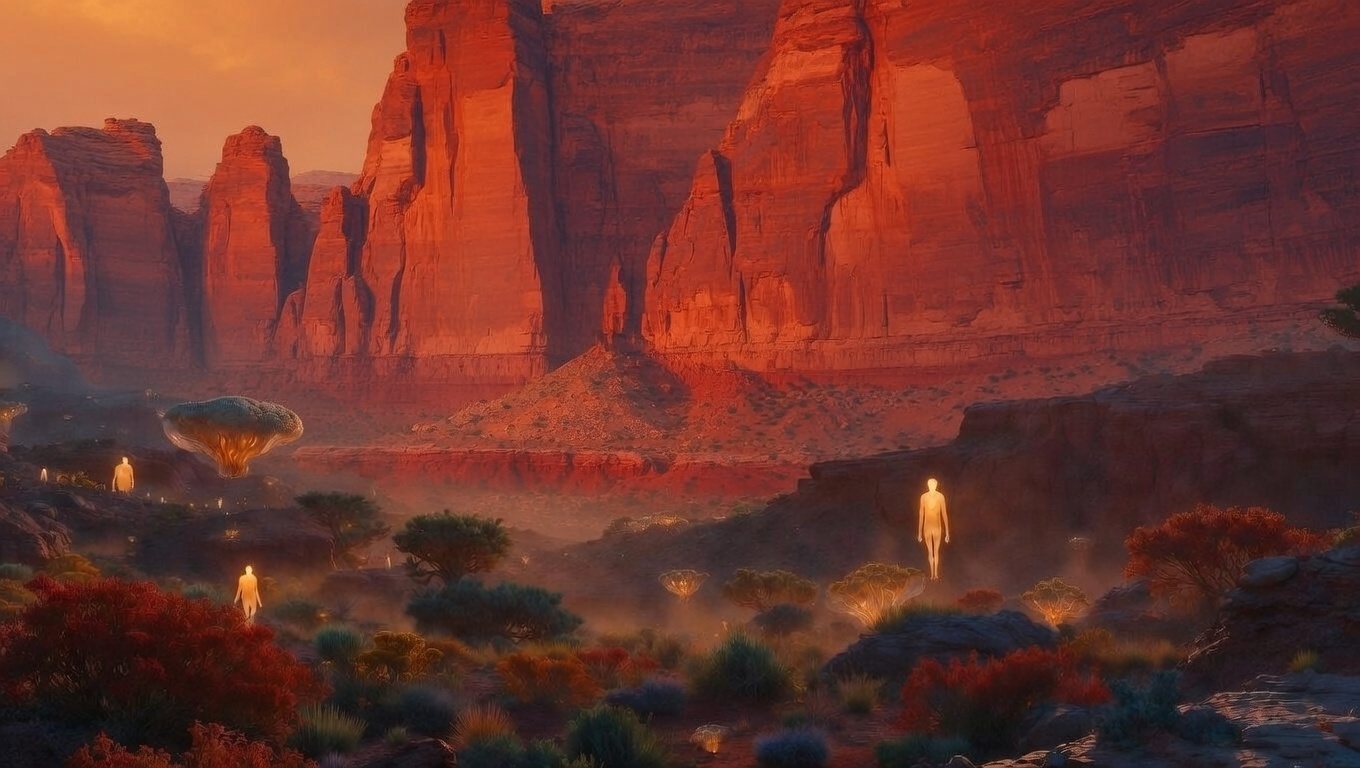
Short answer: According to the material, yes. The biblical concept of archangels — Gabriel, Michael, Raguel, Zadkiel, and others — refers to Taygetans who came down and spoke to humans face to face. Gabriel specifically is identified as the individual who was entrusted by the Federation with hiding one of the three Arks of the Covenant at the Federation starport of Alt-Ur in Iraq, and who later revealed the Koran texts to Mohammed. The term Hashmallim, which the Taygetans use for their Special Forces, is found in the Bible as legions of archangels — because the word was filtered from Taygetan usage into ancient Egyptian-based languages, from which Hebrew derives.
Archangels as Taygetans
Swaruu of Erra addressed the angel concept in Transcript 232, distinguishing between two types of angel associated with different races. The concept of angel as it relates to Taygetans refers specifically to biblical archangels — with names and all. She listed Gabriel, Miguel (Michael), Raguel, and Zadkiel as examples, stating that they come down and talk to humans or have talked to humans face to face. These are not ethereal beings but physical individuals from the Taygetan civilisation who interacted directly with people on Earth.
The Karistus — a race associated with Jupiter described as sixth-density beings — also contribute to the angel concept, but in a different way. They appear as beings or angels of light, sometimes seeming to have wings, and are associated with events where something good happened or a disaster was averted. Swaruu stated that the two races share the concept of angel, but as you see in a different way — the Taygetan version is personal, named, and involves direct communication, while the Karistus version is more anonymous and light-based.
The Hashmallim connection
Aneeka of Temmer confirmed the linguistic connection in Transcript 400. When asked whether the Taygetan term Hashmallim was borrowed from Earth, she stated that the word originated with the Taygetans and was filtered to Earth. It is found in the Bible as legions of archangels — something like Special Forces.
When pressed on why the name sounds Hebrew, Aneeka replied: where does Hebrew come from? It comes from ancient Egyptian-based languages, and what was in Egypt? Taygetans, among others. The word travelled from Taygetan usage into the Egyptian linguistic tradition, from there into Hebrew, and from Hebrew into the Bible. The direction of transmission was from Taygeta to Earth, not the reverse.
Gabriel and the Ark
The most specific account of Gabriel comes from Yazhi Swaruu in Transcript 179, in the context of the Arks of the Covenant. One of the three arks — the redundant one — was stored deep underground at Alt-Ur, a Federation starport in Iraq. Yazhi stated that the ark was named after Gabriel because he was the one who hid it there. It was entrusted to him by the Federation.
This same ark connects Gabriel to Islam. Around the fifth century AD, Muslims uncovered the ark from Ur and took it to Mecca, the birthplace of the prophet Mohammed. Yazhi confirmed that Mohammed was a real historical person, though with exaggerated attributes. The story of Gabriel revealing the Koran texts and giving Mohammed the task of guarding creation in a box refers to this ark. The black cube in Mecca was constructed in connection with its presence.
The ark was eventually removed from Mecca in 2015 in an operation that Yazhi connected to the crane collapse at the Grand Mosque — an event that killed 111 people. Russia, through Karistus allies in Saudi Arabia, obtained the ark and transported it to the Vostok Base at the South Pole.
Michael and Ishtar
The parallel case of the Archangel Michael is instructive. The third ark was called the Ark of Michael, but Yazhi stated that this name was applied only because Christianity altered events, removing any protagonism from any female. It is really the Ark of Ishtar/Isis, because it was Ishtar who kept the biology of Earth there to prevent destruction during the foreseen cataclysm. The two cherubim on top of each ark represent the two civilisations that collaborated in building them — Karistus and Taygeta — not male and female.
This suggests that the archangel names as used in religious tradition are a mixture of real Taygetan individuals (Gabriel) and relabelled figures whose original identity was obscured — Michael being a masculine replacement for the feminine Ishtar/Isis.
Sources: Transcript 179 (Ark of the Covenant — Yazhi Swaruu), Transcript 232 (Jupiter — Solar System — Swaruu of Erra), Transcript 400 (Swaruu of Erra and Aneeka of Temmer — Random Questions)
Speakers cited: Swaruu of Erra, Yazhi Swaruu, Aneeka of Temmer