Short answer: According to the material, the connection between Sirius and Egypt operates on multiple levels. The Sirian races were among the Federation conglomerate that established Egypt as a starport and civilisational centre after the Great Flood. The goddess figure known as Isis or Ishtar — one of the most important figures in Egyptian civilisation — had a strong connection with the Sirians and was highly respected by them, though she was not herself Sirian. The humanoid Sirians from Sirius A are described as having facial features that are very Egyptian, and their architectural influence can be traced through Art Nouveau in cities like Barcelona. The zodiac, central to Egyptian religion, was called the girdle of Isis. Even the word Nazareth, which appears in the Jesus narrative, derives from the Egyptian Nazir, meaning Na-Sirius — from the star Sirius. The Sirians were one of multiple stellar races whose presence in Egypt became encoded in its mythology, symbolism, and architecture.
Sirians as a conglomerate
Before addressing the Egyptian connection, the material establishes what the Sirians actually are. Swaruu of Erra stated in Transcript 119 that the Sirians are not one race but a complex of innumerable races. Everything found about them is varied because they include humanoids, reptilians, felines, and aquatic species. She was emphatic that you cannot talk about the Sirians as if they were a single people.
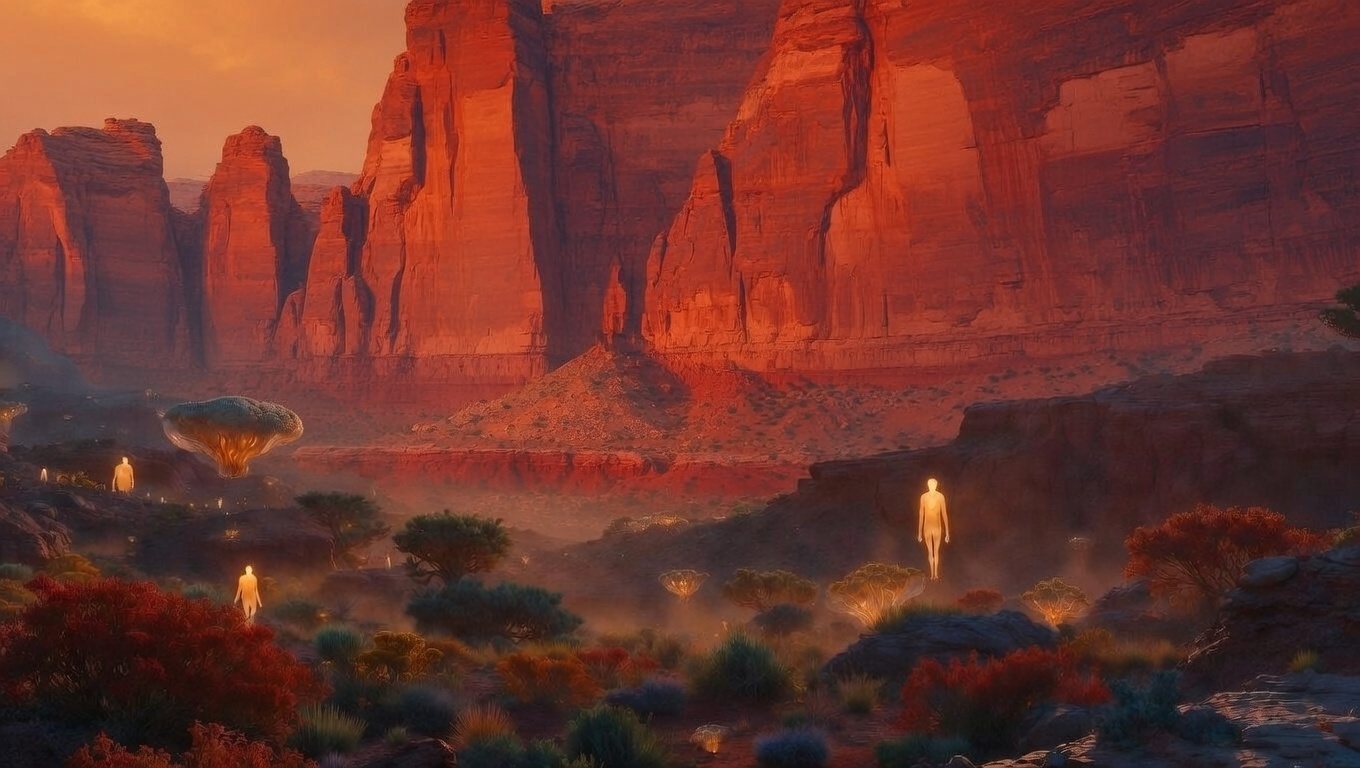
The dominant Sirian civilisation on Sirius A consists of advanced humanoids with a blue tint and dark copper skin, with mild amphibian DNA that is not visually evident. They are all semi-aquatic, with high to moderate amphibian genes, and the Sirius zone is dominated by water planets. There are also multiple species of Sirian felines with advanced civilisations that are not Urmah, and extensive submarine civilisations on Sirius B associated with a species the material connects to the Aquaman concept.
This diversity matters for understanding the Egyptian connection, because the influence of Sirius on Egypt was not from a single species but from multiple Sirian races contributing different elements to Egyptian culture.
Isis, Ishtar, and Sirius
The central figure connecting Sirius to Egypt is the goddess known variously as Isis, Ishtar, and Innana. Swaruu addressed this relationship in both Transcripts 119 and 146.
In Transcript 119, Swaruu stated that the most influential Sirians — those taken as the basis of the Egyptian civilisation as a race — were involved in the post-pyramids and post-Sphinx phase, because the pyramids and Sphinx are prior and of Federation conglomerate origin. She then clarified the Isis connection: Isis, or Ishtar, had a strong connection with Sirius, but was mistakenly portrayed as Sirian. She only worked with Sirians and was highly respected by them.
In Transcript 146, Swaruu provided more detail about Ishtar as a historical figure. Ishtar was a real person — a visitor who lived mostly in her ship, which shone like the sun due to superheated atmosphere, leading the Egyptians to perceive her as a deity living in the sun. She was present in Egypt around 10,500 BC and lived in various locations throughout the Nile Valley.
Swaruu described Ishtar's mission as the removal of the lunar Matrix — the electromagnetic barrier that the Federation had imposed using a combat-damaged Andromedan biosphere ship (the Moon) after the Tiamat cataclysm. The pyramids were part of the system to raise the frequency of the planet, placed on ley lines throughout the globe. But the invading reptilians had already made plans to use the Matrix to their convenience and attacked, forcing the Federation to withdraw again.
The name Innana, Swaruu noted, roughly translates as the one who favours and the one who gives. The problem today is that the name Isis has been corrupted — not only by the terrorist group but by the Black Ishtar concept that the Cabal worships, which represents the negative inversion of the original figure.
Sirian influence on Egyptian appearance and architecture
Swaruu made a direct physical connection between the Sirians and Egyptian culture. Describing the humanoid Sirians from Sirius A, she stated that their facial features are very Egyptian. This is not a coincidence — it reflects the direct involvement of Sirian beings in the establishment of Egyptian civilisation.
The architectural influence is also noted. The Sirians had extensive contact with the Mayan civilisation and have a large number of starseeds on Earth. Their building style — naturally shaped structures looking like sponges or hollow rocks with multiple organic-looking windows — is compared to Art Nouveau architecture, with Swaruu pointing to Barcelona as containing evident examples of this style similarity. The rounded, organic quality of Sirian construction contrasts with the more geometric Federation style seen in the pyramids.
The Sirians also contributed to mythology worldwide, not just in Egypt. Swaruu stated that there is mythology all over the Earth talking about advanced water beings who planted medicine, art, and architecture, and specifically connected the Sirians to the Dogon myths in Mali, where the Dogon people have detailed legends about beings from Sirius A and Sirius B.
The zodiacal and astrotheological connection
Transcript 161 reveals the deeper symbolic connection between Sirius and Egyptian religion through astrotheology. Swaruu explained that in ancient Egypt, the new year began in the sign of Virgo, which at that time began around July 25th, coinciding with the ascent of Sirius on the horizon. The zodiac itself was called the girdle of Isis, the virgin goddess. Isis was the prototype of the Mary concept in Christianity, with her son Horus equivalent to the sun, just as the son of Mary — Jesus — was made equivalent to the Saviour.
The word Nazareth, which appears in the Jesus narrative as Jesus of Nazareth, encodes a Sirius connection. Swaruu stated that there was no place called Nazareth at the time, and that the word derives from the Egyptian Nazir, meaning the prince who is commanded. Nazir means Na-Sirius — from the star Sirius. This etymological connection places Sirius at the root of terminology that was later absorbed into the fabricated Jesus narrative.
Egypt as Federation base
The broader context is that Egypt was not primarily a Sirian creation but a Federation conglomerate project. Swaruu stated in Transcript 146 that Egypt was Federation, from where it was intended to return the Earth back to being progressive and peaceful. Many stellar races were present in Egypt because they were guides for the native population.
The pyramids were built by this Federation conglomerate, with Thoth as the main builder, using technologies including anti-gravity levitation, sonic levitation, and liquid stone. The Sirians were one component among many — alongside Taygeteans, Andromedans, Arcturians, and others. The specifically Sirian contribution came in the post-pyramid phase, influencing the development of Egyptian civilisation, its religious concepts, and its aesthetic traditions.
The distinction the material draws between Federation Egypt and Reptilian Atlantis is relevant here. Swaruu stated in Transcript 146 that Egypt equals Federation while Atlantis equals Reptile Confederation. The Sirian involvement in Egypt was part of the Federation's effort to rebuild civilisation after the flood, in opposition to the reptilian power structures that had controlled Atlantis and would later infiltrate Egypt through figures like Akhenaten.
The Dogon connection
The Dogon people of Mali represent perhaps the most direct surviving evidence of Sirian contact outside of Egypt. Swaruu confirmed that the Dogon legends about beings from Sirius A and B reflect real contact, and noted that there is also a Sirius C. But she cautioned against treating any single set of myths as reflecting a single Sirian species — the Earth does not have influences of one Sirian species only, but multiple ones. Just as there are multiple Pleiadian species that have influenced Earth, the Sirian influence is diverse and multi-layered.
Sources: Transcript 119 (Extraterrestrial Races: Sirians — Swaruu of Erra), Transcript 142 (Pyramids: How Were They Built — Swaruu/Yazhi), Transcript 146 (Ancient Egypt: Symbology — Swaruu/Dhor Kaal'el), Transcript 161 (Jesus Part 3: Astrotheology — Swaruu of Erra)
Speakers cited: Swaruu of Erra